Featured
Table of Contents
Treatment can not make all of life's challenges vanish, yet it can help you begin reacting to hard people or scenarios in much healthier, more efficient ways.
Evolution in therapy is constantly a positive indication. It suggests you're boosting and moving on, and it declares that you're being supported where you are currently, not where you were when you started. Attaining your first objectives and establishing new ones with your therapist shows true momentum in your healing trip.
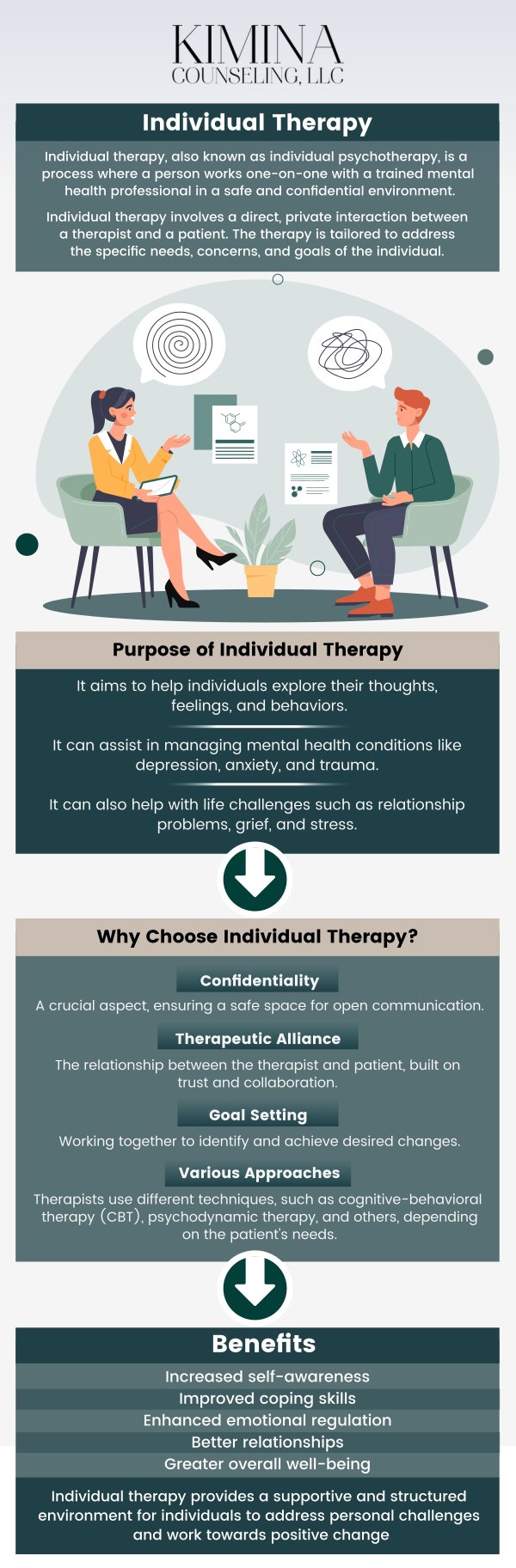
Development in treatment is hardly ever, if ever, linear. This indicates things won't constantly happen in a straight line or in a foreseeable method. You might have troubles, regressions, or hard minutes along the method, however it is very important to keep in mind that these become part of the process, not an indicator of failing.
Are you considering therapy but are unsure how frequently you should go to sessions? Locating the perfect equilibrium in between therapy appointments can be an essential consider your mental wellness trip. In this post, we will check out the question: Just how commonly should you attend treatment sessions? There is no one-size-fits-all solution to this concern, as the depends upon numerous factors.
Anxious Thoughts Intervention for Real Change
At Depth Counseling, we provide lasting psychodynamic psychotherapy. Many medical professionals agree that participating in represents the minimal level of immersion to see lasting results. The reason is simple: therapy is a practice. Just like meditation, yoga exercise, workout, creating, or any various other method, it calls for uniformity of immersion with a great deal of technique to find out and internalize the practice.
This will certainly equip you to choose that seem like your selections (not simply adjustments to the needs of other people). As you find out to determine and navigate the intricacies of your interior globe via of therapy, you will discover better credibility and imagination in work and in your partnerships.
We motivate you to talk to among our specialists to establish the appropriate regularity for you. It is likewise essential to recognize that, in instances of financial difficulty, a number of our therapists can and will certainly fit a lesser regularity of treatment. Our company believe that it is essential to satisfy you where you are and to move at the speed you establish, as you start this profound trip.
Many individuals go to therapy once a week, and some might even go two times a week if they are managing acute distress or have extensive treatment objectives. As they proceed, these sessions may end up being less regular. For those with less pressing issues who only go to therapy for ongoing maintenance, bi-weekly and month-to-month sessions are enough.
Why to Initiate Your Transformation Experience
There isn't just one factor dictating the number of times one need to most likely to treatment, yet various aspects that contribute in identifying treatment frequency. These aspects can be inner (individual struggles, inspirations, and so on) and external (therapeutic aspects). By comprehending these factors, you will certainly understand why your specialist develops a certain timetable and why that schedule is most fit to your healing journey.
In such cases, twice-weekly sessions might be required. Fulfilling the specialist extra frequently in the onset of therapy is usually suggested. It could be on a weekly or biweekly basis, and the reason for this is easy: the much more you meet with the specialist, the sooner the therapeutic bond can be developed.
Ending the Dynamic of Enabling
The frequency of treatment sessions also comes down to what therapies are being used. Various treatment techniques have different session frequency recommendations since some can be intensive while others might not be. Psychoanalysis commonly needs multiple sessions a week, while psychodynamic treatment (what we offer at Deepness Counseling) might need just weekly sessions.

Your budget plan, work timetable, personal availability, and the range in between your home and the facility should all be gone over with your therapist. This is important for establishing a therapy routine that maintains you dedicated without adding any kind of undue tension. No matter the psychological health problem, attending regular treatment sessions can be useful for all those that regularly most likely to therapy.
The Research Behind Depression Therapy
When treatment sessions are arranged at a set interval, it enables you and the specialist to create a more powerful partnership, which, in turn, produces greater trust fund in less time. This develops a secure space where you can refine and discuss your experiences, ideas, and sensations with your specialist so that they can obtain understanding right into your struggles.

As you satisfy your specialist much more often, the likelihood of concerns going unaddressed, however small, is low. With constant weekly follow-ups, the specialist can examine the progression made and strengthen coping mechanisms and new discoverings regarded essential for causing enduring adjustments. A therapistclient partnership is established on depend on, and without regular meetings, it can be difficult to construct that trust fund.
Boosting Personal Value for Goal-Oriented Professionals
When you really feel understood and unconditionally supported, you can share your thoughts, feelings, and has a hard time without reservation. For intimate conversations to flow easily, it is essential to have a favorable atmosphere where individual expression is not suppressed by judgment. One method to create such a risk-free space is to fulfill your therapist consistently to review your problems and find resolutions throughout the time committed to you.
It is a crucial part of mental healthcare that can have a profound influence on a person's total wellness. Identifying will certainly be needed is an ongoing process that might call for modifications in the process. It is important to pay focus to signs that suggest the demand to increase or decrease the.
Review your worries with your therapist and explore the opportunity of even more extensive treatment. If you locate yourself experiencing increased distress, enhanced symptoms, or a worsening of your psychological wellness condition, it may indicate the need for even more constant therapy sessions. Interact these adjustments to your specialist so that they can readjust your treatment plan accordingly.

Table of Contents
Latest Posts
Dialectical Behavior Therapy: Building Interpersonal Effectiveness for Daily Life
Targeted Plans for Personal Personal Story
Process of Transformation from Both Trauma and Disordered Eating with Holistic Health Program
More
Latest Posts
Dialectical Behavior Therapy: Building Interpersonal Effectiveness for Daily Life
Targeted Plans for Personal Personal Story
Process of Transformation from Both Trauma and Disordered Eating with Holistic Health Program